5 training tips for every HYROXer
Compromised running, pacing without GPS, training to the rulebook and two more lessons I learned the hard way.
 Reece · Level 3 PT · 19 October 2026 · 6 min read
Compromised running, pacing without GPS, training to the rulebook and two more lessons I learned the hard way.
Reece · Level 3 PT · 19 October 2026 · 6 min read
Whether it's your first HYROX or your fifth, the same few things make the biggest difference. None of them are about finding the perfect programme. They're about training for what the race actually feels like.
Even good runners struggle in HYROX. A 5k on fresh legs is one thing. A kilometre straight after a heavy sled push is something else entirely.
If you don't know how that feels, race day is a horrible place to find out. Building up running volume under fatigue is key:
In my first race I went out way too fast. My first kilometre was under four minutes, my 5k pace, and I paid for it for the rest of the race.
Part of the problem is that GPS watches are unlikely to work properly inside a venue. The pace on your wrist can be wildly off, so a lot of the time you're going to have to run on feel.
The other option is a bit of maths. Each 1 km run is made up of laps of the track, and the number of laps varies by venue. Check the athlete guide for your event, then work out what each lap should take at your target pace. Hit the lap button on your watch and compare.
Practise running by feel in training, too: run a kilometre at what you think is race pace, then check the time. You'll quickly learn how accurate your sense of pace is. I've written more about this in HYROX pacing strategy: how fast to run each km.
Every rep in HYROX has to meet a standard, and judges are watching. A no-rep means doing it again, and that costs time and energy you don't have.
So train every rep to race standard, not just the ones you're counting:
Standards change from season to season, so read the official rulebook for your division before you race.
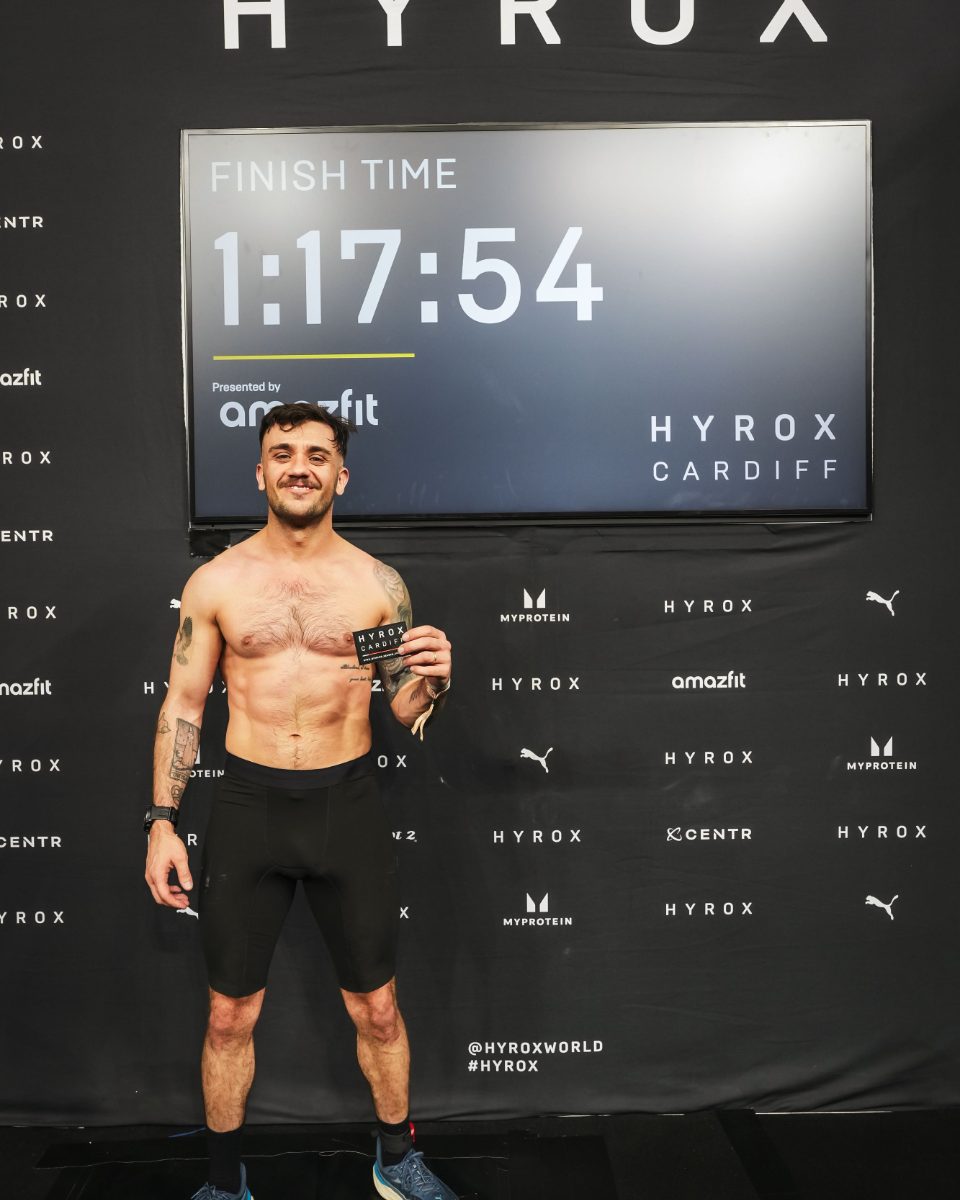
In London I spent 12:11 in the Roxzone, the transitions between the track and the stations. In Cardiff it was 3:19. The biggest difference was that I didn't stop.
Train for that. When a session mixes running and stations, don't rest in between. Even in the gym, jog to the next piece of equipment. It teaches your body to keep moving when it's tired. More on this in What is the Roxzone?
Unless you're a pro, you're really only competing against yourself. Your first time is your benchmark, not your verdict.
Learn from your mistakes, but also enjoy it.
Go in with a plan, pace it sensibly and take notes afterwards: which runs faded, which station hurt most, how long you spent in the Roxzone. That's what you build the next race on. If you want to know where your time sits in the field, read What is a good HYROX time?
Start with a target. The HYROX time calculator gives you a pace for every run, a time for every station and a pacing sheet to train with.
Get your free race plan, or book a call to talk through your training.