What is a good HYROX time?
Benchmarks by experience, division and age, and what I learned going from cooked in London to 1:17 in Cardiff.
 Reece · Level 3 PT · 19 October 2026 · 7 min read
Benchmarks by experience, division and age, and what I learned going from cooked in London to 1:17 in Cardiff.
Reece · Level 3 PT · 19 October 2026 · 7 min read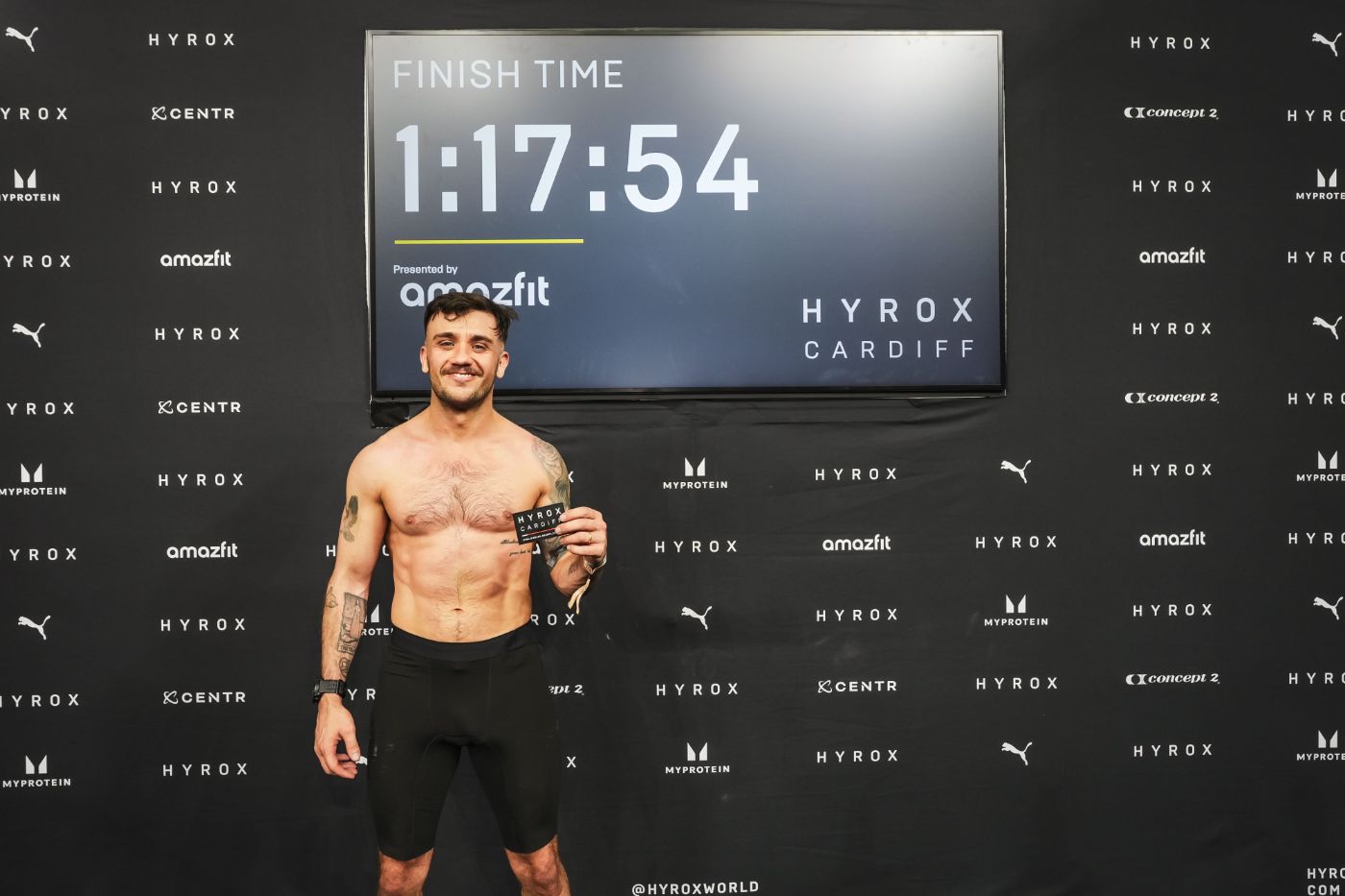
It's the first thing almost every client asks me once they've booked a race. What's a good time? Usually what they actually mean is: what time will stop me feeling embarrassed?
So here's my honest answer, with real benchmarks further down. But first, the story of my own first race, because it explains most of what I believe about this question.
December 2025, London ExCeL, Men's Open. I'd set myself a target of 1:15. As training went on I realised that was overambitious, and anything around 1:25 would have been a win.
On the day, I went out too fast. After the SkiErg I thought I felt good. Then I looked at my watch. My heart rate was at 190.
Well… s**t. I've cooked myself here.
That's the HYROX trap. The first few runs feel easy because you're fresh and the arena is loud. By the time you notice you're redlining, there are still six stations to go. I crashed in the later rounds, and I got so hot moving through the Roxzone that I had to stop.
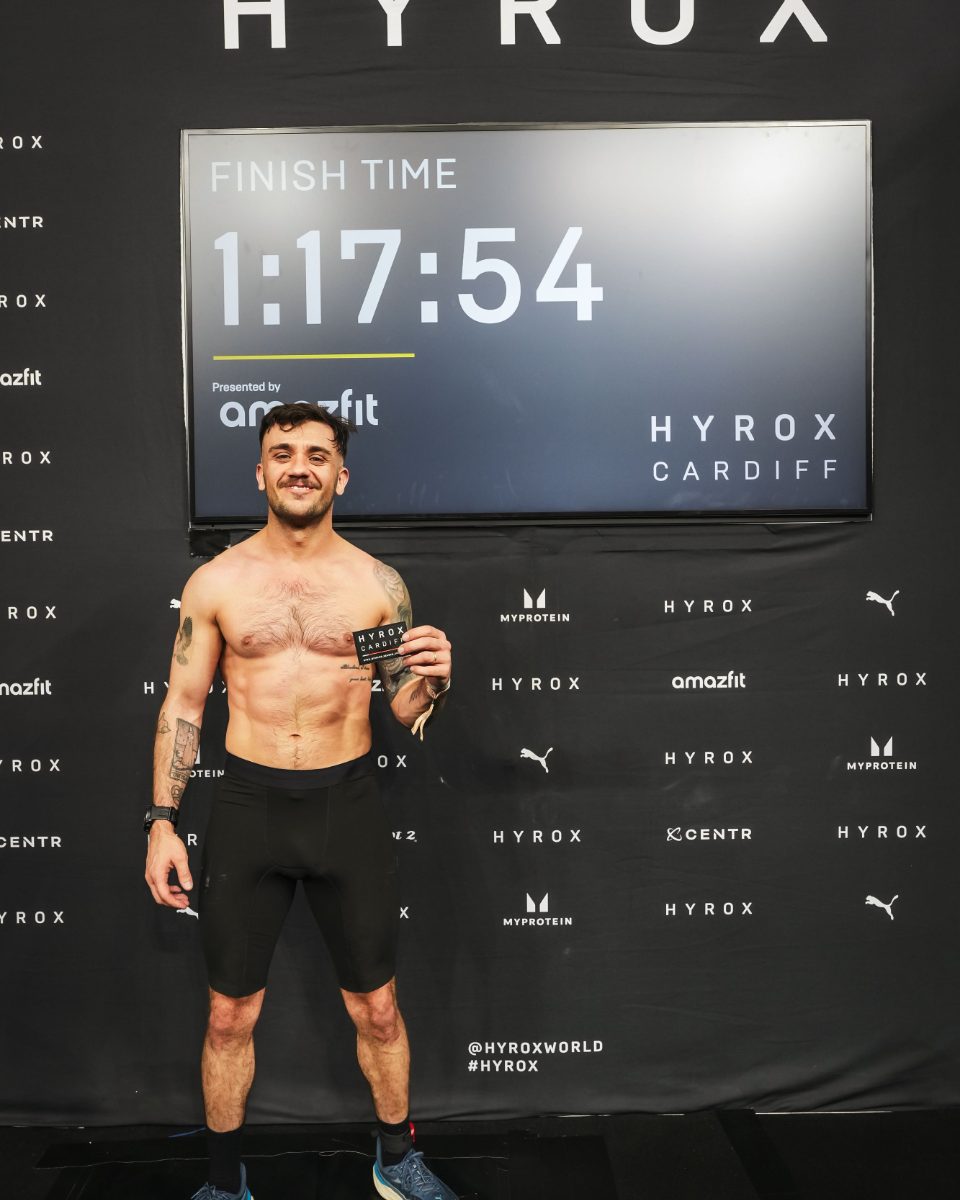
Five months later in Cardiff I ran 1:17:54, right on the edge of the fastest 25% of Open men. I didn't get dramatically fitter. I got smarter about pacing.
If you take one thing from this article: the time you lose by going out too hard is far bigger than the time you gain.
HYROX doesn't publish percentiles, but independent analysts have crunched over a million official results. Here's what it takes to reach each part of the Open field.
| Open field | Men | Women |
|---|---|---|
| Fastest 5% | 1:06:55 | 1:14:28 |
| Fastest 10% | 1:10:23 | 1:18:09 |
| Fastest 25% | 1:17:27 | 1:25:20 |
| Median (middle of the field) | 1:27:16 | 1:35:22 |
| Slowest 25% | 1:40:08 | 1:48:52 |
| Slowest 5% | 2:07:42 | 2:17:39 |
Source: NORMA Athletics, from 1,028,303 official HYROX results, seasons 7–8. Medians, so half the field is faster and half slower.
That last row matters. One in four Open men take longer than 1:40, and one in twenty take over two hours. If that's you, you're in good company, and you've still done something most people never try.
Pro is a different race, with heavier sleds, sandbags and wall balls. The median Pro time is actually faster (1:20:48 for men, 1:26:29 for women) because of who enters, not because it's easier.
Age matters less than people think. Times are almost flat through your twenties and thirties, then slow by a few minutes per decade. Here's the median Open time by age group:
| Age group | Men | Women |
|---|---|---|
| Under 30 | 1:25:00 | 1:34:20 |
| 30–39 | 1:25:59 | 1:34:39 |
| 40–49 | 1:29:28 | 1:36:32 |
| 50–59 | 1:35:13 | 1:41:34 |
| 60+ | 1:42:47 | 1:48:00 |
Source: NORMA Athletics, from 1,028,303 official HYROX results, seasons 7–8. Medians, so half the field is faster and half slower.
For an exact comparison, look up the official results for your venue and filter by your division and age group.
Here's what I tell every client:
Your first time is your benchmark, not your verdict.
Unless you're a pro, you're really only competing against yourself. So learn from your mistakes, but also enjoy it. A good time is one where you paced it well, finished strong and learned something you can take into the next race.
For me, that next race is about getting to 1:15. Steady progress, not a single big leap.
Once you've got a target, the next step is pacing it. I've written about exactly that in HYROX pacing strategy: how fast to run each km.
The quickest way to get a realistic number is to work from your running. Pop in a recent 5k or 10k and your background, and the HYROX time calculator will give you a target finish, every split and the stations where you'll gain the most time.
Free. Every run and station split, plus a pacing sheet for race day.